
Matthias Hohlrieder opened C•SOL Roastery in Austria with 15 years in specialty coffee behind him, but he had never run a production roaster. This is how he went from his first production batches on an early ROEST P3000 to roasting 190 kg a day, how he built a workflow for one person and what gave him the confidence to keep going.
15 years in coffee, new to production roasting
His family runs a traditional bakery and coffee shops in a small village in Austria. At 16, he trained in the green coffee warehouses of a large roaster in Hamburg. He went on to complete a Coffee Masters degree and compete in the Austrian Brewers Cup.
He learned to roast from scratch on a ROEST L100 sample roaster. He bought it before the P3000 to understand the technology behind the bigger machine.
“I had no roasting experience before. Without this machine, my roastery would not be where it is today.”
Every week without a roaster cost money
Matthias is also a professional triathlete who trains around 30 hours a week. On a campaign shoot in Australia, an athlete’s husband offered him a coffee he had roasted in his garage.
It clicked. Matthias was already selling around 2 tons of coffee through his family’s business. Why weren’t they roasting it themselves? He compared machines and chose the P3000 for its precision, traceability and technology.
Then the clock started. He had leased a roasting space and bought 2 tons of green coffee, and every week without a roaster cost him money. His biggest fear was that nobody would buy the coffee. Rather than wait for a finished production unit, he took delivery of one of the first late-stage P3000 prototypes.
Matthias tells the story in his own words.
A workflow built for one person
A production day at C•SOL starts with a 20–25 minute warm-up. While the machine heats, Matthias prepares packaging and preweighs green coffee into 3 kg batches. From there, roasting and everything else happen at the same time.
“While the machine is roasting, I’m already packing and shipping coffee, working on web shop orders, cleaning, doing maintenance or cupping new samples. The machine lets me be a one-man show and do many things at once. I can focus on more important things instead of waiting for the roast to finish.”
By November 2025, he could roast and pack 120 kg on his own in about 8 hours and be done by 6 p.m. By June 2026, he was roasting 190 kg a day.
A one-person production day at C•SOL.
Data-supported, taste-driven
Matthias describes his approach as data-supported and taste-driven. His roast curves, batch history and quality control live in ROEST Connect.
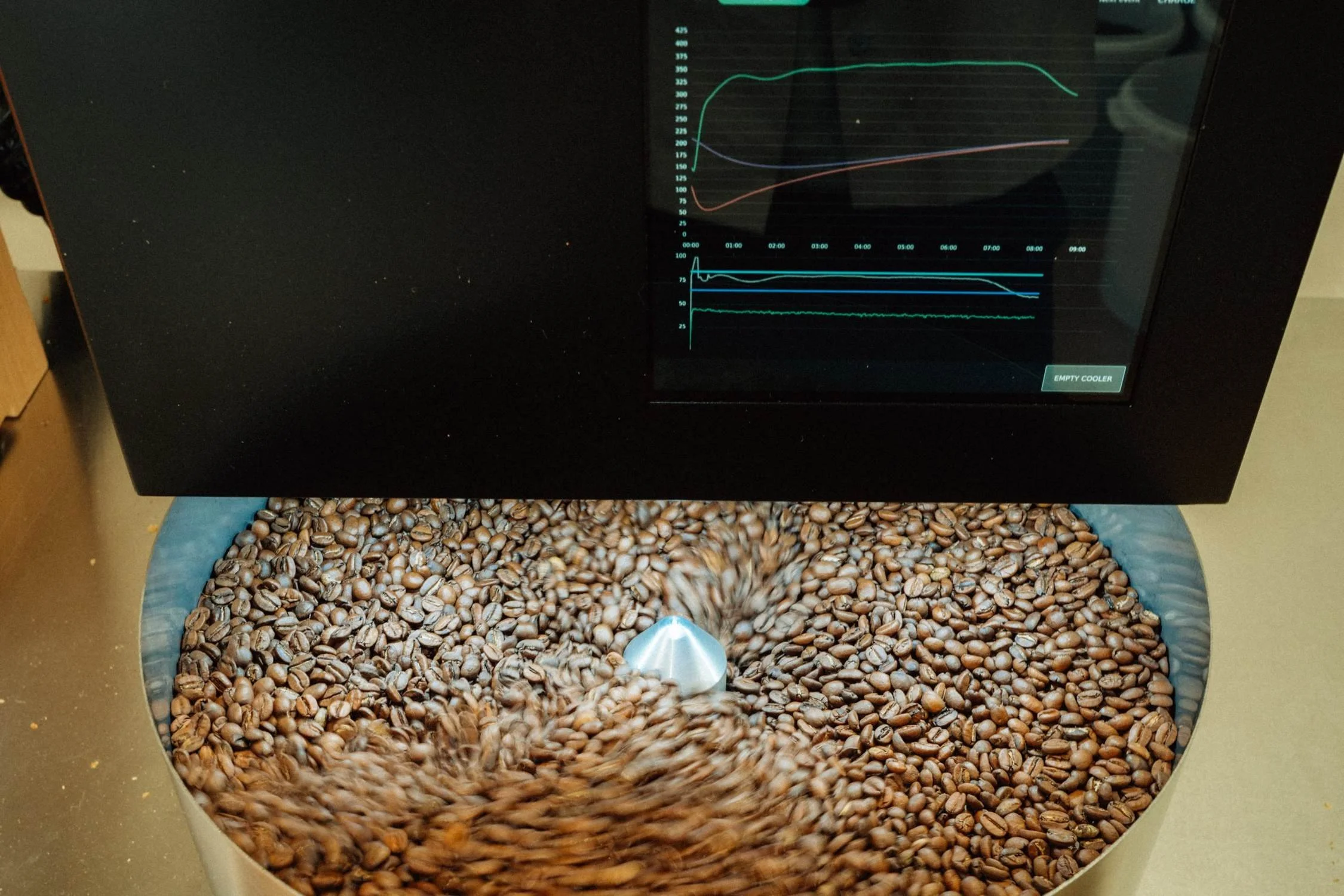
Matthias keeps his roast curves and batch history in ROEST Connect.
Credit: Carolin Unrath
“The most beautiful data doesn’t help us if the coffee doesn’t taste well. I’m a tech person and I’m a nerd, and I like nice numbers and nice curves. But as long as the coffee also tastes well, then everything makes sense to me. ROEST ticks all these boxes for me and supports consistency, day per day.”
That consistency lets him trust the process without years of roasting instinct to fall back on.
“I didn’t have a lot of roasting experience before I started roasting. But the technology of the P3000 and ROEST in general, and the whole support team gave me the confidence to put out my coffees day per day.”
“The most beautiful data doesn’t help us if the coffee doesn’t taste well.”
Confidence to fix it himself
As one of the first P3000 customers, Matthias ran a late-stage prototype, and early hardware came with some minor issues.
“I don’t know how to wire cables by any means.”
The ROEST team walked him through each repair remotely, step by step, so he could make the fixes himself.
“They helped me change the inlet sensors, motors, etc., and it was pretty amazing. This gave me the confidence over the years to believe in this machine and how it’s built and how it’s set up. It’s pretty easy to change things, and you don’t have to be worried at all.”
“You can fix a broken machine, but broken customer service is harder to fix.”
On the shelf and across the street
Specialty coffee isn’t a big thing in Matthias’s village, so C•SOL sells mostly internationally. Its bags sit on shelves in Hamburg and London next to some of Europe’s best-known specialty roasters. The packaging is a bold orange and white, a deliberate choice from someone who studied the psychology of economics and knows a brand has to stand out.
Closer to home, regulars in their 50s and 60s at the family bakery across the street now order anaerobic fermented coffees from Colombia for their morning filter.
“It’s quite special to see this change in our small village, and I’m as proud of it as I am of serving my coffee in one of the best coffee shops in the world.”
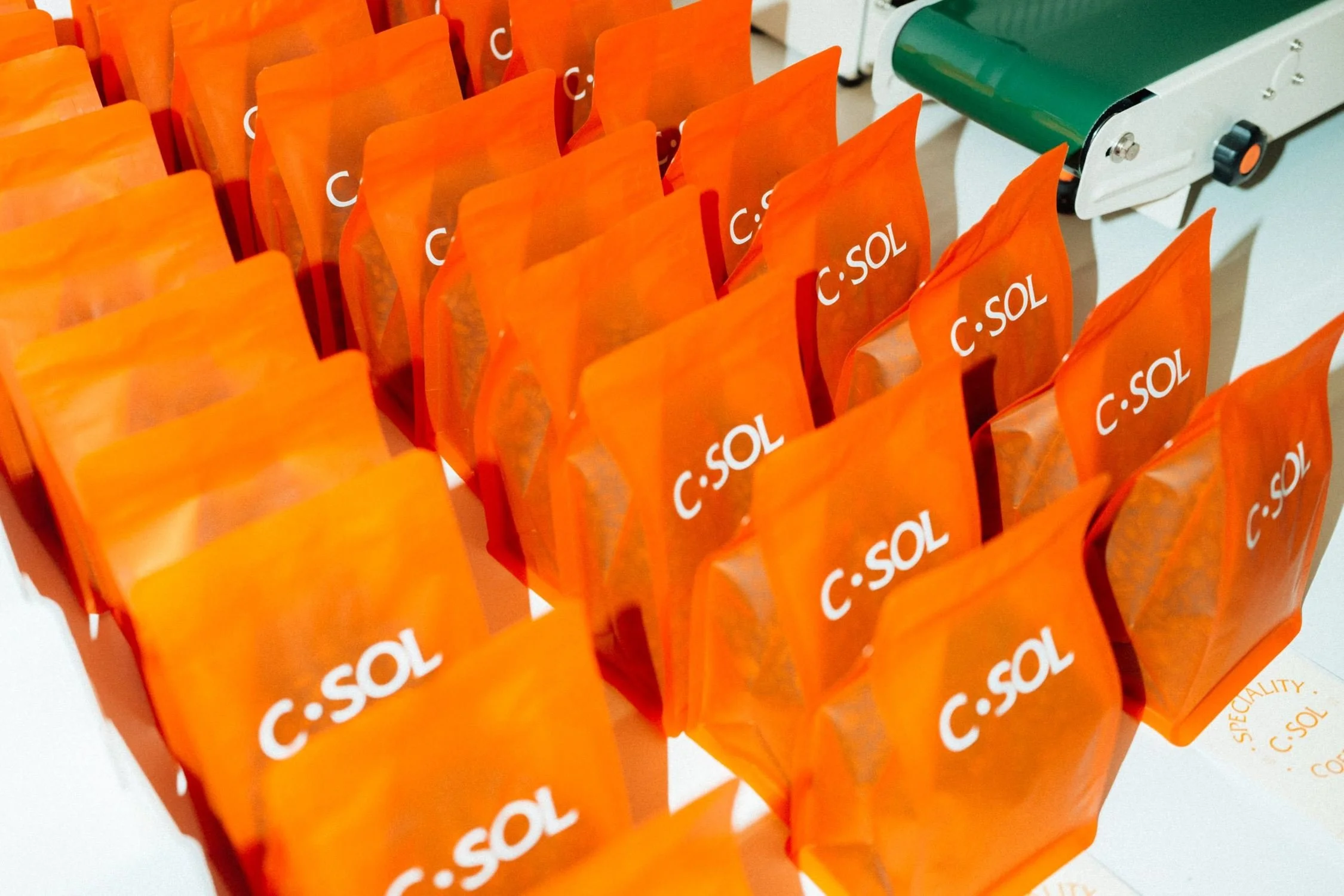
Bold orange bags, designed to stand out on the shelf.
Credit: Carolin Unrath
Still learning
Matthias doesn’t claim to have mastered the P3000. He still adjusts loading temperatures and roast times in small steps and says there’s much more to learn. He approaches it the way he approaches a triathlon.
“It’s about persistence, like in sports. It’s a marathon.”
Interested in the P3000?
The ROEST P3000 roasts up to 25 kg an hour and 500+ kg a week. It’s fully electric and needs about 5 minutes of hands-on work per hour.
Ready for pricing? Get a quote for your P3000.
Learn more about C•SOL Roastery at csolroastery.com. Read how Hakone Coffee, Hibi Kaffe and ROAST run the P3000. For an experienced roaster’s view on batch size and throughput, read Christopher Feran’s post.
